
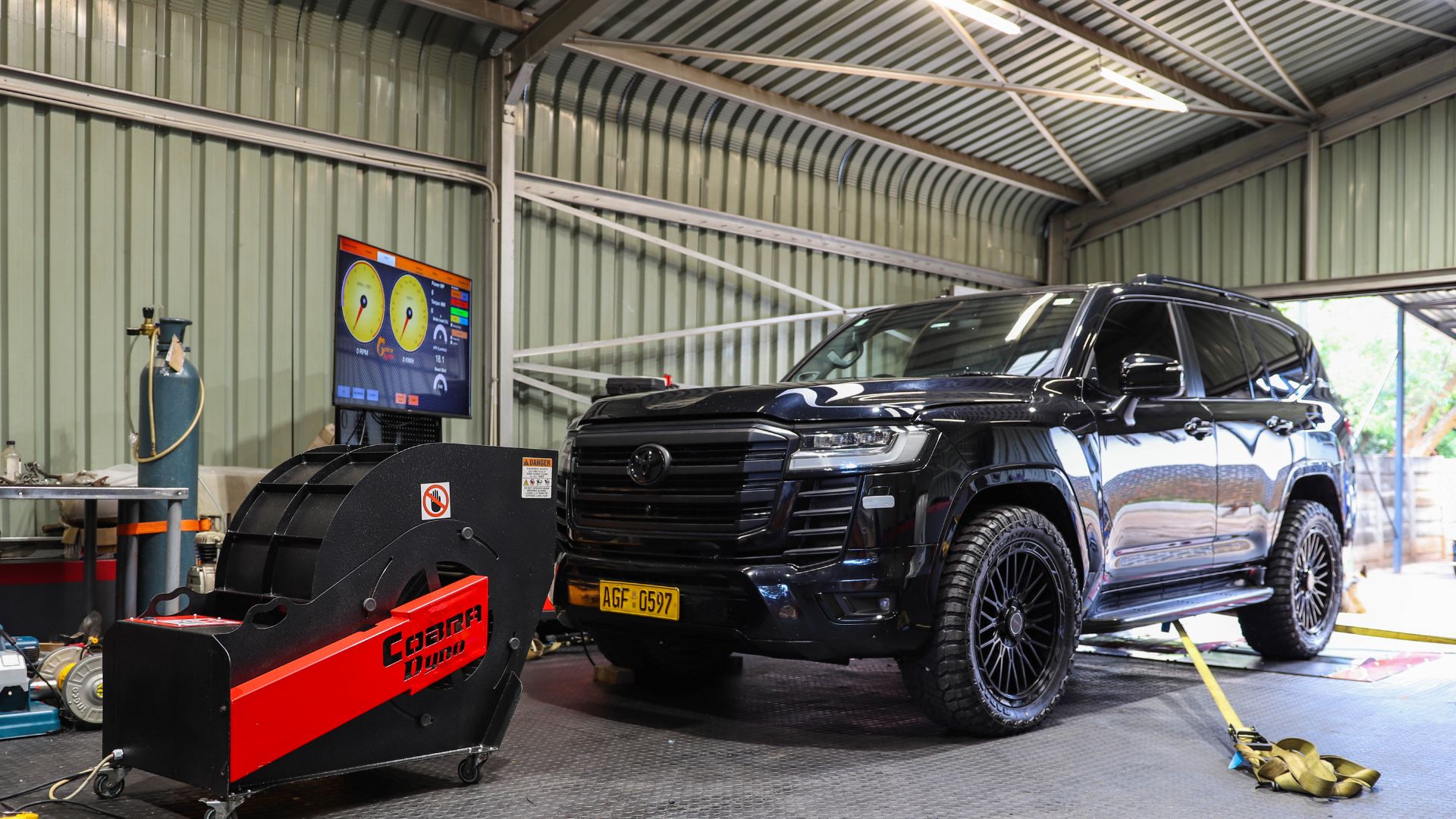
Diesel Tuning – Landcruiser 300 Series (3.3L V6 Twin‑Turbo Diesel)
The Landcruiser 300 Series diesel is a modern powerhouse. With the F33A‑FTV 3.3‑litre V6 twin‑turbo diesel, it’s built for heavy work and long distances. But like all modern diesels, it comes strangled by emissions hardware.
This particular 300 Series was an import, so it had factory‑fitted DPF and AdBlue systems – which are a reliability nightmare if left intact.
✅ DPF and AdBlue removal is critical for turbo longevity (legal in Zimbabwe)
✅ Proper diesel tuning does not create smoke – we calibrate cleanly
✅ We offer two power levels: one for towers, one for enthusiasts
✅ Exhaust upgrades? Currently no good options – we’ll explain
The Stock Baseline (With DPF & AdBlue Still Fitted)
Before any work, we dynoed the vehicle in its factory form – with DPF and AdBlue systems still active.
Stock (DPF/AdBlue fitted):
301 horsepower and 581 Newton‑metres of torque.
Already a strong starting point. But the engine was clearly strangled by emissions hardware.
Our Calibration – After DPF/AdBlue Removal
We performed DPF and AdBlue removal (essential for reliability) and loaded our custom calibration.
After removal + tune:
374 horsepower and 700 Newton‑metres of torque.
That’s a gain of 73 horsepower and 119 Nm – a very healthy increase.
✅ No smoke – clean diesel combustion
✅ Factory turbo and injectors remain
✅ Engine now breathes freely without clogging risks
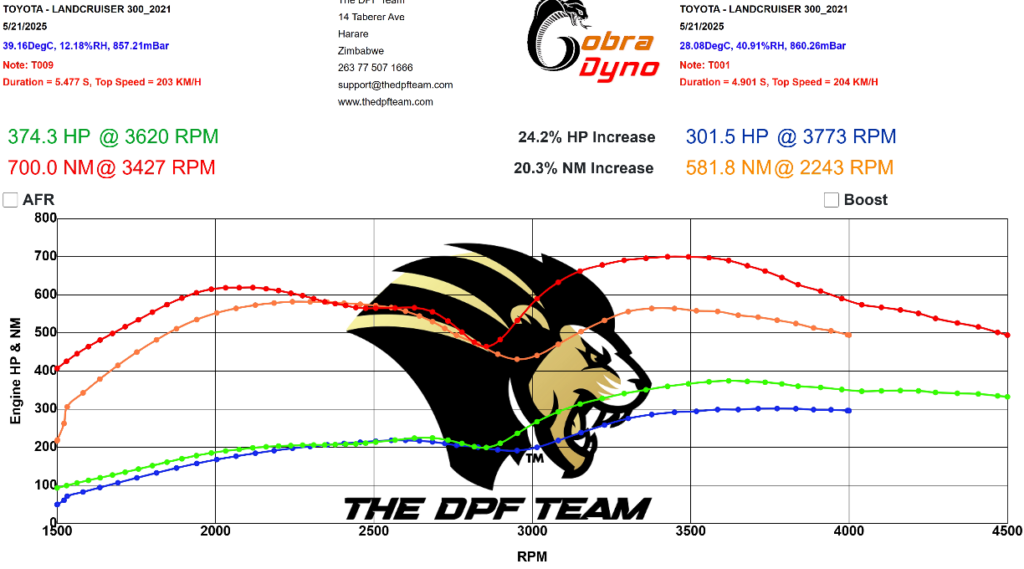
Blue line: Stock with DPF/AdBlue – 301hp / 581Nm
Green line: After DPF/AdBlue removal + tune – 374hp / 700Nm
Why DPF & AdBlue Removal Is Not Optional – It’s a Death Sentence to Turbos
On imported 300 Series diesel vehicles, the DPF and AdBlue systems are not fit for long‑term reliability. They cause:
✅ Increased backpressure – raises exhaust gas temperatures (EGTs)
✅ Clogged DPF – forces the engine to work harder
✅ AdBlue crystallisation – expensive injector and pump failures
If you leave these systems intact and tune the vehicle, you will destroy your turbos. High EGTs from a restricted exhaust will overspeed and overheat the turbochargers, leading to premature failure.
Here in Zimbabwe, removal is legal. We do it properly, recalibrate the ECU, and the result is a healthier, more reliable engine.
Two Power Levels – Towing vs Non‑Towing
Not every 300 Series owner uses their vehicle the same way. We offer two safe options:
✅ For Customers Who Tow (caravans, boats, heavy trailers)
Power level: 370–390 horsepower
Reason: Towing generates sustained high EGTs. By keeping power in this range, we manage exhaust heat and protect the turbos during long climbs or hot weather.
This is the responsible choice for towers. You still get a massive improvement over stock, but with a safety margin.
✅ For Customers Who Do Not Tow (daily driving, overlanding without heavy trailers)
Power level: 428–450 horsepower (safe and healthy for the motor)
Reason: Without the sustained load of towing, the engine can handle the extra boost and fuel without overheating the turbos. The F33A diesel is a robust engine, and these numbers are well within its safe operating limits.
✅ Stock turbo and injectors can handle this range reliably
✅ Transmission remains happy (we monitor torque limits)
✅ No smoke, no drama – just serious diesel power
What About an Upgraded Exhaust? (Important Note)
Many owners ask about fitting a larger exhaust to gain more power. Here is the honest truth:
✅ There are no good exhaust upgrades on the market for the 300 Series diesel yet.
✅ Some shops sell 3″ systems – but these do not improve performance meaningfully. They may change the sound, but that’s about it.
✅ To see a real performance gain (lower EGTs, better turbo response), you would need a 3.5″ to 4″ system – but nobody makes one yet.
So for now, we recommend sticking with the factory exhaust after DPF/AdBlue removal. It flows adequately for up to 470hp (we tested this on our dyno). If you simply want a different sound, a 3″ system is an option – but don’t expect power gains.
We are actively looking for a reputable fabricator to develop a proper 3.5–4″ exhaust. When that becomes available, we will update our customers.
The Bottom Line (For Landcruiser 300 Series Diesel Owners)
| Use Case | Power / Torque | Notes |
|---|---|---|
| Stock (with DPF/AdBlue) | 301hp / 581Nm | Factory baseline – not recommended to keep |
| After DPF/AdBlue removal + tune (towing spec) | 370–390hp | Heat‑managed, safe for heavy towing |
| After removal + tune (non‑towing spec) | 428–470hp | Safe, healthy, transformed performance |
| Exhaust upgrade | No good options yet | 3″ systems only change sound; 3.5‑4″ needed but unavailable |
| Beyond 450hp | Upgraded turbos + fuel system + intercooler | Contact us – we can develop |
No stages. Just honest diesel tuning with real advice.
300 Series diesel on the dyno: Speed increased on Japanese spec from 180kph to 270kph
Ready for Your Landcruiser 300 Series Diesel?
If you own an imported 300 Series diesel (or any 300 with DPF/AdBlue) and you want:
✅ Reliable DPF and AdBlue removal (legal in Zimbabwe)
✅ A safe tune tailored to your use – towing (370–390hp) or non‑towing (428–470hp)
✅ Clean diesel combustion, no smoke, and transformed drivability
✅ Honest advice about exhaust upgrades (none good yet)
…reach out. We’ll inspect your vehicle, recommend the right power level, and perform the work professionally.
And if you want to push past 450hp? Let’s talk. We’re happy to develop that with you.